
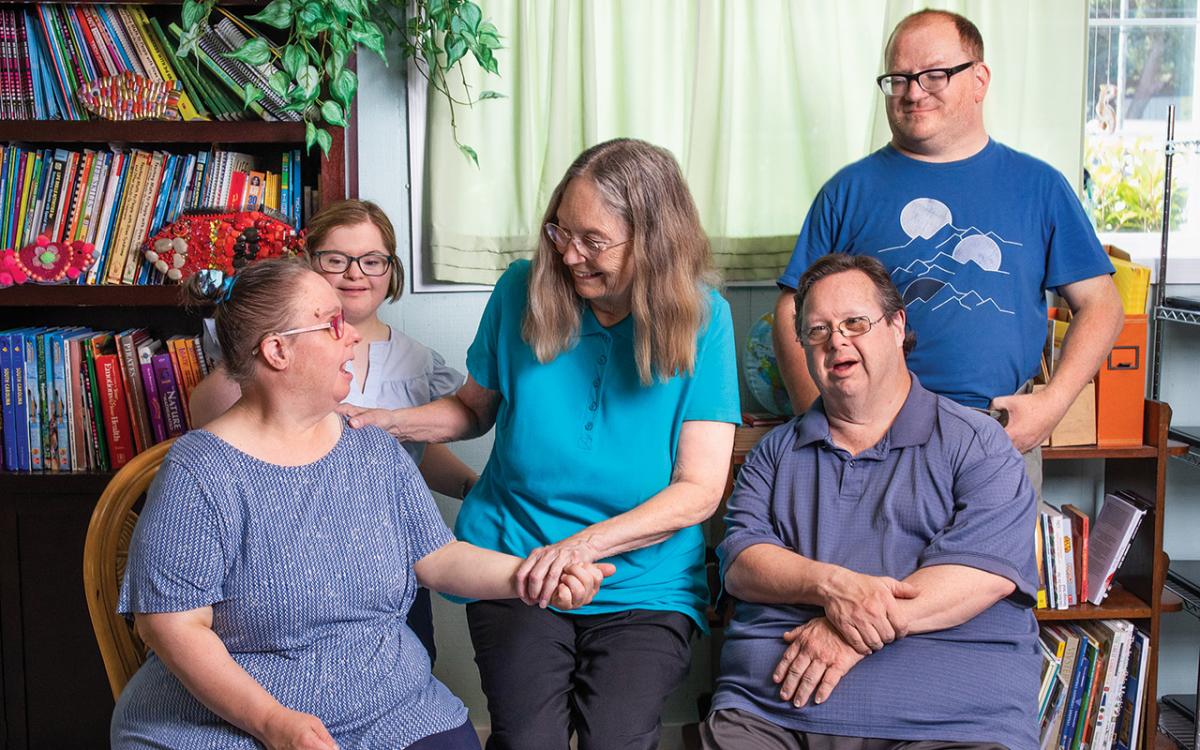
 Taken from RI website here.
Rotaractors with intellectual disabilities learn life skills
Cleo the two-toed sloth, cute enough to break the internet, was blowing Megan Marrero’s mind. She and a small group of fellow Rotaractors were visiting an aquarium in the tourism hub of Myrtle Beach, South Carolina, and marveling at the slow-moving, upside-down tree-hanging creature. It especially captured Marrero’s imagination.
The research trip to the aquarium, paid for with a district grant, is a case in point. A few weeks after the visit, the Rotaractors are putting on a presentation to share what they learned with the other students at Current Transitions as a mentorship and leadership development opportunity. Marrero is telling them all about the Linnaeus’ species of two-toed sloths, which have coarse fur, long limbs, and curved claws, and are native to the rainforests of Central and South America.
“I like that they move slow,” Marrero tells the group. “They are good swimmers.” (And they’re not nearly as scary as other inhabitants of the aquarium, like the sharks, stingrays, and giant sawfish.) Several students in the room cheer: “Good work, Megan!” and “Nice job, Megan!”
In another presentation, Marrero is called forward to help with a “walking water” science project that demonstrates the phenomenon of capillary action using absorbent strips of cloth to move colored water between cups.
Hager says she was inspired to bring the students into Rotaract by Past District Governor Craig Hill, who helped form the Little River satellite club and an Interact club for high school students. “I’d been listening to Craig talk about what Rotaractors do, and I thought that it would be really great for our students,” Hager says. “They just fit the program.”
Then she set about talking to the parents of students involved in activities designed for them free of charge at Current Transitions. With the parents’ permission, Hill introduced Hager’s idea to Rotary District 7770.
Hill worked with then-District Governor Bob Gross and Alicia Pijal-Avila, a Club and District Support staff member at RI headquarters, to complete the charter application. The sponsor Rotary club pays the Rotaractors’ dues.
It is not the only club that has made efforts to include members with intellectual and developmental disabilities. A new Rotaract club in Fairmont, West Virginia, for instance, includes people with autism and Down syndrome, says Pijal-Avila. Many of the club’s members are clients of a disability action center who are mentored by Rotarians.
Meetings of the Little River Current Transitions club would be familiar to most Rotary members, especially those in the American South who appreciate country banter, the lighthearted conversation that punctuates rural life here. Often someone is nominated to deliver a joke of the day. Try this one: What kind of music do balloons hate? Pop! Groans and laughter ensue.
Then there’s a report about projects and fundraising. The club’s members have been collecting aluminum cans for recycling, and they organized a “Gigantic Yard Sale” of electronics, jewelry, tools, kitchenware, and more on the Current Transitions parking lot over two days in May. Families of students often come to hear presentations on topics as practical as how to use Google Maps to plan a trip. And Rotarians are a dependable audience for this group. “They double the size of the crowd,” Hager says.
So what does Megan Marrero like best about being a Rotaractor (besides hanging out with sloths)? “I like to help my community,” she says.
A new member, Kevin Dunbar, agrees and says he especially likes helping out at the North Myrtle Beach Area Historical Museum. What he enjoyed most at the aquarium was “cleaning it up and making it look good.”
The Rotaractors also regularly volunteer at an assisted-living center in Little River where they join together with residents in singing, making crafts, and sharing holiday cards.
Their meeting business done, members prepare to close out the gathering the same way many clubs do around the world by reciting The Four-Way Test.
But first Hager draws the name of a member who gets to choose a song of the day. She selects Dunbar’s name and he chooses Bon Jovi’s “It’s My Life.” Spirited dancing ensues.
Inclusive volunteering
People with intellectual disabilities, like all people, can benefit from meaningful volunteer opportunities. The Arc, a disability rights group, has these tips for making volunteer opportunities inclusive:
- Presume the volunteer can competently do the work. People with disabilities are engaged in many kinds of volunteering. They may need to ask for support, so be as clear as possible about the type of work and your expectations.
- Always use respectful and inclusive language in your volunteer training. Take some time to learn about disability etiquette.
- Plan for success with the volunteers and their supporters. Go over specific tasks, how the volunteers will be trained, and who in your program can act as a mentor.
- Ask volunteers what works best for them to overcome challenges. Often, they will already have ideas. If not, brainstorm solutions with the volunteers and their supporters.
- Consider the volunteer for a job. Volunteers with disabilities can also be enthusiastic and excellent employees.
This story originally appeared in the September 2025 issue of Rotary magazine.